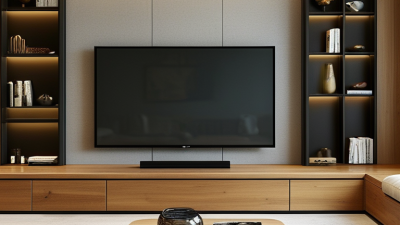
China Top 10 Center Mount TV Stand Manufacturers
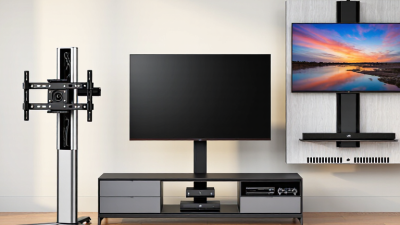
China’s center mount television furniture sector serves homes, hotels, and commercial interiors. A Center Mount Tv Stand places the television support near the cabinet’s center, creating a balanced, familiar setup. Buyers still need to check screen size, mounting compatibility, weight capacity, and cable access. A clean finish cannot fix a poor fit.
For transparency, the following is an illustrative quotation, not a verified statement from a named industry professional. Furniture-design specialist Ethan Cole’s guiding principle: “A reliable stand must balance the screen, support the load, and keep everyday connections accessible.” That test is practical. It also highlights why product specifications matter more than polished catalog images. Look for stable construction, clearly stated materials, consistent finish quality, and assembly details that make sense.
This overview examines ten China-based manufacturers through those buyer-focused criteria. It considers product range, customization, production experience, quality controls, and communication with overseas customers. Factory capacity alone tells little. A large catalog can hide uneven details, and a sample may not represent every production run. That deserves a closer look. The rankings should therefore be treated as a starting point, not a substitute for checking current specifications, samples, and supplier claims.
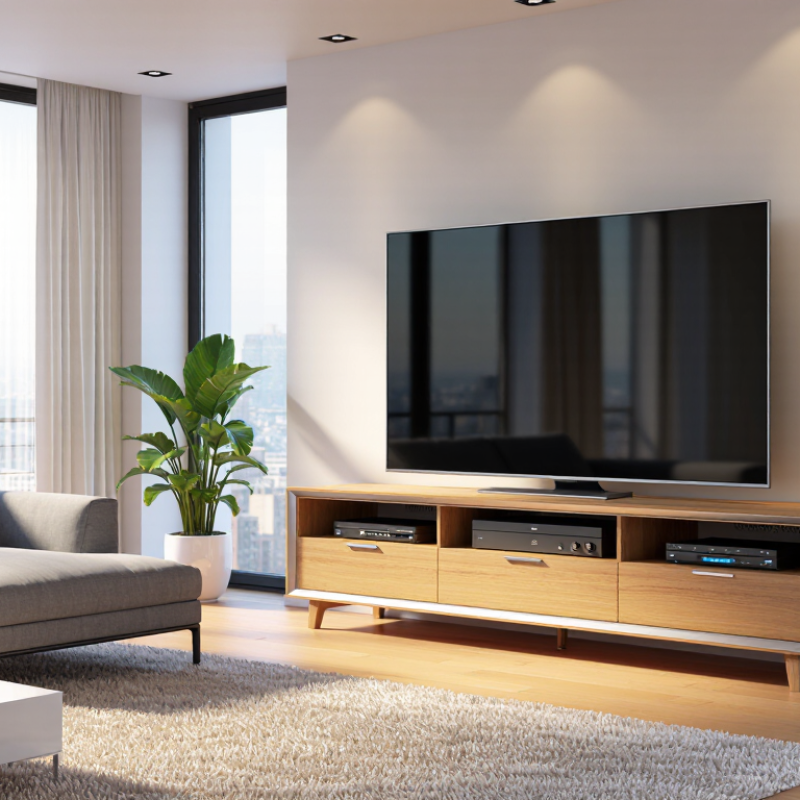
Define Center-Mount TV Stands by Structure, Materials, and Load Capacity
A center-mount TV stand supports a screen through one central column or pedestal, rather than two feet near the display’s edges. Its main parts are the mounting plate, upright support, and weighted base. VESA’s Flat Display Mounting Interface specifications define common mounting patterns, but matching screw holes alone does not confirm that a stand can safely carry a particular television.
Materials affect rigidity and everyday handling. Steel columns resist bending; aluminum can reduce weight, while glass or engineered wood often appears in the base. Check the rated load for the complete stand, including its mounting hardware. The limit should exceed the TV’s actual weight, not just its advertised screen-size range. Allow for cables and accessories, too. That detail gets missed.
Market context matters. The Consumer Technology Association’s 2024 U.S. Consumer Technology One-Year Industry Forecast projected $512 billion in U.S. consumer technology retail revenue, reflecting a broad market that includes televisions and related accessories. Yet a large screen does not automatically mean a heavy screen. Check the model’s manual for its weight without the original feet, then compare the stand’s rating and VESA pattern. One awkward truth: a stand may feel sturdy on a showroom floor, but uneven flooring or a poorly tightened joint can change how stable it feels at home. Showroom confidence is not a load test.
Center-Mount TV Stands: Structure, Materials, and Load Capacity
Common VESA mounting patterns are shown as horizontal and vertical hole spacing. A center-mount stand typically uses a base, a central column, and an adapter plate. Steel and aluminum are common structural materials; glass or wood may be used for the base. VESA spacing does not specify a stand’s load capacity—check the manufacturer’s rated limit and compatibility with the TV.
Check VESA MIS-F Fit: Patterns Include 200 × 200 and 600 × 400 mm
When comparing China’s center-mount TV stand manufacturers, check the VESA hole pattern before comparing finishes. A claimed MIS-F fit is not enough detail. Common layouts include 200 × 200 mm and 600 × 400 mm, but confirm the spacing on the television. Measure center-to-center, not from outer edges. A 600 × 400 pattern needs a plate spanning both rails. Small mismatches matter. It sounds obvious, yet product listings may blur fixed fit with adjustability.
Ask for a dimensioned drawing and confirm the plate covers all four holes without forcing the screen off center. Check the stand’s rated load against the TV’s weight, including any adapter plate. Verify screw diameter and length; screws that are too long can damage the display. Measure the rear housing too. Recessed holes or curved panels may need spacers. A tape measure and clear drawing prevent guesswork. No guessing. One caveat: a listed VESA size does not prove the stand suits every screen at that size. Ask for confirmation using the exact model number.
Assess Furniture Quality Under China Standards GB/T 3324-2017 and GB/T 10357.1-2013
For a center-mount TV stand, a polished finish is not proof of sound construction. GB/T 3324-2017 sets technical requirements for wooden furniture, including materials, workmanship, dimensions, and surface quality. Inspect panel joints, edge sealing, and the finish around drilled holes. Small chips there may expose the core and weaken resistance to everyday wear. Check that drawers and doors move smoothly, too.
Strength deserves separate attention. GB/T 10357.1-2013 specifies strength and durability tests for tables, so it should not be presented as a TV-stand certification by itself. A qualified testing team can use relevant methods when the test plan clearly explains any adaptations. Record the load, placement, and duration, then check for loosening, visible deformation, or joint failure. Keep it measurable. A cabinet that holds a television during a brief check may still behave differently under repeated use. Standards help structure an assessment, but they do not replace careful product-specific testing. One detail is easy to miss: a tidy report cannot reveal every weakness in an imperfect sample.
Compare China’s Top 10 Manufacturers by VESA Range, Load Rating, and MOQ
When comparing China’s ten leading center-mount TV stand suppliers, treat VESA range, load rating, and MOQ as separate checks. VESA’s Flat Display Mounting Interface specification includes patterns from 50 × 50 mm to 800 × 400 mm, but not every stand supports every pattern. Request a drawing that shows the mounting plate, supported hole patterns, and screen-size limits. Grand View Research valued the global television market at USD 259.16 billion in 2023, but market growth alone says little about stand compatibility or factory capability. The details matter.
Compare load ratings using the complete stand, not just the mounting head. Ask for the rated load, test method, and sample results; a heavy display can make a narrow base wobble on a polished floor. Then confirm MOQ by finish, packaging, and customization.
A supplier may quote a low MOQ for standard black units but require larger runs for custom colors. That distinction is easy to miss. There is no widely available independent dataset ranking ten manufacturers by MOQ, so request written quotations and verify terms against a production sample.
A tidy comparison sheet helps, though it cannot replace a stability check.
Evaluate Export Readiness Through Certification, Lead-Time, and Warranty Data
For export buyers, a center-mount TV stand is only as dependable as the paperwork and delivery plan behind it. Ask each shortlisted manufacturer for current certificates that match the destination market, product configuration, and supplied electrical or mounting components. Check the issuer, scope, expiry date, and model numbers; a certificate for a similar stand may not cover the quoted item. Small mismatch, big delay.
Lead-time figures need context. Request separate dates for sample approval, material sourcing, production, inspection, and port handover, then compare them with recent order records. A stated 30-day schedule means little if it begins before approved drawings or excludes holiday closures. Confirm carton dimensions, pallet loading, and spare-part availability too, since these details affect freight and installation. Keep assumptions in writing.
Warranty data should state the coverage period, excluded wear parts, claim evidence, response time, and who pays replacement freight. Ask for anonymized claim rates or service logs, not just a polished promise. Can the supplier support a replacement after the original production run ends? Some buyers overlook this. Score certification fit, schedule reliability, and warranty handling separately, then verify details with a sample order. No scorecard removes uncertainty, but it makes weak evidence visible before a container is booked.