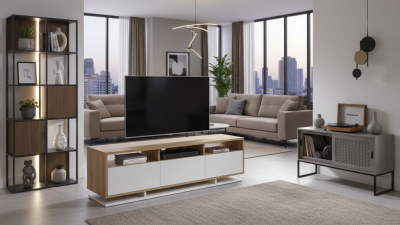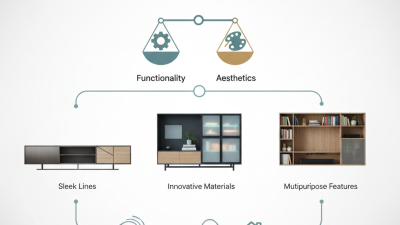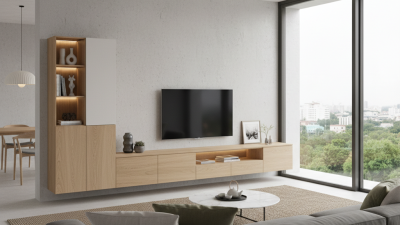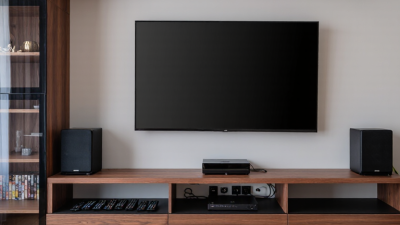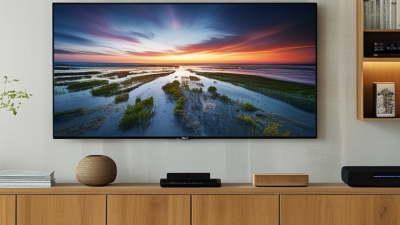
Choosing High End Tv Consoles in 2026 means balancing visual appeal with everyday performance. A striking cabinet can still disappoint if it blocks a soundbar, traps heat, or leaves cables tangled behind the screen. Measure the television, wall, and viewing area before comparing finishes. Check the console’s width, depth, weight capacity, and storage layout against your actual equipment. Small details matter.
Interior designer Nate Berkus has said, “Your home should tell the story of who you are, and be a collection of what you love brought together under one roof.” That idea is useful here: the best console should feel at home in your room, not like a showroom display. Look closely at veneer, solid wood, metalwork, hinges, and drawer movement. Ask how shelves manage ventilation and whether cable openings line up with your devices. These practical checks are easy to overlook.
A premium price does not guarantee a better fit. Not always. Compare construction and warranty terms, then consider how the piece will serve you as devices change. A glossy finish may show fingerprints; a deep cabinet may crowd a narrow walkway. There is no perfect choice, and style can sometimes outweigh convenience. It is worth noticing that trade-off before buying. This guide will help you assess proportions, materials, storage, technology compatibility, and long-term value, so your decision rests on more than a polished product photograph.
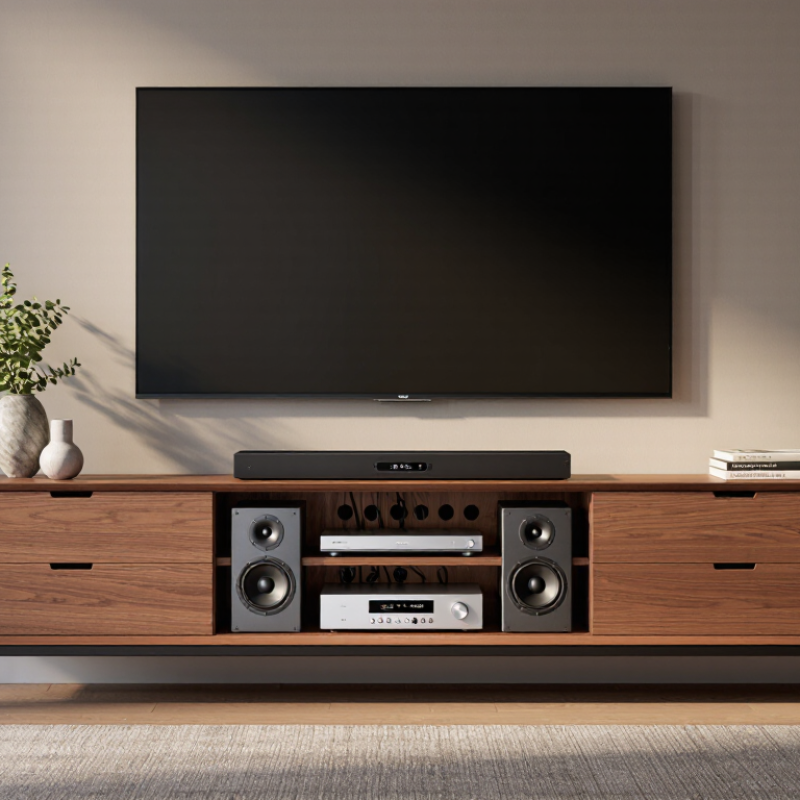
Choose the console only after mapping the room. Measure wall width, skirting boards, outlet positions, and door swings. Then mark the screen and console footprint with painter’s tape. This reveals cramped walkways before delivery. The 2024 U.S. Houzz & Home Study reported a $24,000 median renovation spend for projects in 2023. That figure is not furniture-specific, but it shows why avoiding preventable rework matters.
Set the viewing position before choosing console height. Guidance based on Society of Motion Picture and Television Engineers viewing practices uses a horizontal viewing angle of about 30 degrees as a useful reference. Check the screen from the main seat, not just while standing in the showroom. A sofa that shifts even slightly can change the sightline. Measure twice.
Match storage to the equipment you actually use. List streaming devices, game systems, remotes, and any physical media, then allow room for cables and airflow. Closed doors look tidy, but they can block infrared signals or trap heat. Open shelves solve some problems and create visual clutter. That trade-off is easy to underestimate. Leave space for future devices, yet avoid buying a console so deep that it narrows the room. A few centimetres can matter in a small living area.
| Room and Viewing Setup | Typical Viewing Distance | Suitable TV Size | Suggested Console Width | Storage and Layout Priorities |
|---|---|---|---|---|
| Compact room or apartment living area | 5–7 ft (1.5–2.1 m) | 43–55 in | 48–66 in | Choose a shallow console to preserve floor space. Prioritize enclosed storage for small devices and a rear cable-management opening. |
| Average living room with a sofa facing one wall | 7–9 ft (2.1–2.7 m) | 55–65 in | 60–78 in | Balance drawers or cabinets with open shelves for frequently used equipment. Check that doors and drawers can open without blocking walkways. |
| Large living room with flexible seating | 9–11 ft (2.7–3.4 m) | 65–75 in | 72–88 in | Consider a wider console with adjustable shelves and ventilation space for multiple components. Center the screen on the primary viewing position. |
| Dedicated media room | 10–13 ft (3.0–4.0 m) | 75–85 in | 80–100 in | Plan for receivers, streaming devices, and other equipment. Look for ventilated compartments and accessible cable routes. |
| Corner or open-plan layout | Varies by seating position | 55–75 in, depending on distance | Choose a width that fits the usable wall section | Measure nearby doors, windows, radiators, and traffic paths. A low-profile or modular design may work better than a deep, fixed unit. |
Measurement tips: Console-width ranges are practical starting points, not fixed rules. Measure the TV’s actual width and available wall space; a console slightly wider than the TV often creates a balanced appearance. Viewing distance and preferred screen size vary with room layout and personal comfort.
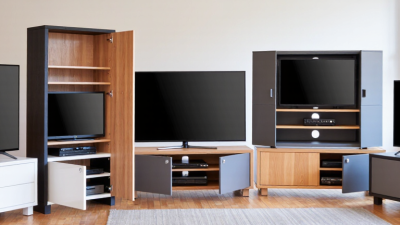
A console should fit the television’s actual footprint, not just its advertised screen size. RTINGS’ TV size guide puts a typical 65-inch, 16:9 screen at about 57 inches wide, before accounting for its frame or stand. Measure the set from edge to edge, then check the distance between its feet. Both feet should sit fully on the console, with a little room at each side. A wider top also looks more balanced. For a 57-inch screen, a console around 65 inches wide gives roughly four inches of extra space per side. Measure your room, too; wall trim and nearby doorways can make a theoretically suitable console awkward.
Check load capacity against the television’s weight with its stand attached, then add the weight of devices placed on the console. Leave a sensible margin rather than choosing a rating that barely matches. For example, a combined load of 100 pounds suggests looking for a console rated comfortably above that figure, while following its maker’s stated limits. Ratings may describe evenly distributed weight, not pressure concentrated beneath small feet. That detail matters. Confirm the feet land over supported areas, and check whether a center support is required. Product specifications can be confusing; when the load rating or support layout is unclear, measure again and ask the seller before buying.
A high-end TV console should feel solid before it looks impressive.
Check the rear panel, drawer bottoms, and underside; these hidden areas often reveal whether construction matches the price. Feel the edges. Veneer should lie flat, joints should sit tight, and doors should close without scraping.
The USDA Forest Products Laboratory’s Wood Handbook explains how moisture changes can make wood swell or shrink, so stable construction and a well-sealed finish matter in rooms with seasonal humidity. Solid wood is not automatically superior; poorly dried boards can move more than carefully engineered panels.
Ask for specific evidence, not broad claims.
The U.S. EPA’s 2018 Advancing Sustainable Materials Management report estimated that Americans generated 12.1 million tons of furniture and furnishings waste that year. This is not a measure of any console’s lifespan, but it shows why repairability and long service life deserve attention.
Look for replaceable hinges, accessible cable openings, and a finish that can be touched up. Also request documented load and stability testing; ANSI/BIFMA X5.9 provides test methods for storage units. A glossy showroom sample tells you little about years of use.
Slightly imperfect, perhaps: inspect a real drawer under weight, then open it repeatedly. Ask what can be repaired, and who supplies the parts.
A high-end TV console should do more than hide equipment; it should keep cables orderly and let components breathe. Measure the television, soundbar, and other devices before shopping. Check shelf depth, rear openings, and whether plugs can bend without pressing against the wall. A removable back panel makes cleaning and future changes easier. Small details matter.
Ventilation is easy to overlook. Enclosed shelves can trap heat, especially when several devices run together. Look for open backs, ventilation slots, or adjustable shelves, and leave space around devices as their manuals recommend. A neat, closed-door appearance is tempting, but it may conceal a poor airflow layout. I would not trade equipment safety for a perfectly hidden cable.
Smart-device compatibility involves more than fitting boxes on a shelf. Consider power outlets, cable lengths, remote-control signals, and access to ports you use often. If a console has doors, confirm that signals can reach devices inside; some materials can block them. A power strip may also need a dedicated, ventilated space. It is worth checking every connection before buying, though measurements can still miss an awkward plug or stiff cable. Leave room to adjust.
In 2026, judge a high-end TV console by how it works in your room, not by its finish alone. Measure the TV base, wall clearance, and cable route before comparing designs. Solid doors hide routers and game systems, while open shelves improve airflow but collect dust. Check shelf depth with your actual devices; a few extra centimeters can prevent awkward overhang. A polished surface is appealing, but it may show fingerprints more readily than a textured finish.
Safety deserves equal attention. The U.S. Consumer Product Safety Commission estimated an average of 22,500 emergency-room-treated injuries annually from furniture and TV tip-overs during 2018–2020. Ask whether the console includes an anti-tip kit, and confirm that its instructions suit your wall type. A heavy cabinet is not automatically stable. Review the warranty for coverage of hinges, drawer slides, finishes, and labor; a long term may still exclude ordinary wear. Compare the full cost, including delivery, assembly, and any required anchoring hardware. I would not treat premium pricing as proof of better construction. Sometimes a simpler console with clear safety guidance and accessible replacement parts is the better value.