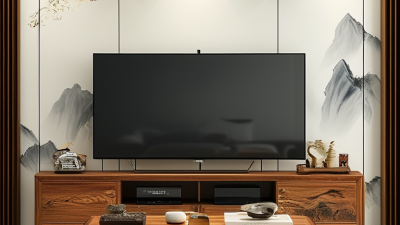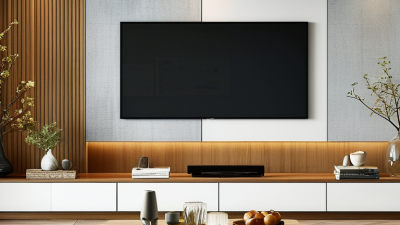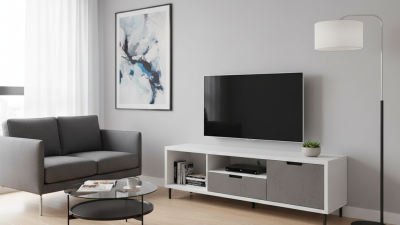
Smart TVs are no longer passive screens. They are central points for streaming, gaming, video calls, and connected-home control. This shift is reshaping furniture design worldwide. Grand View Research estimates that the global smart TV market will continue expanding through 2030, supported by higher internet access and smart-home adoption. Omdia’s Connected TV research also shows the growing importance of streaming platforms and connected viewing experiences. For global buyers, the cabinet must now support technology, storage, safety, and interior style together.
This is where the Smart Tv Cabinet becomes more than a decorative product. Current trends include floating wall-mounted designs, ventilated compartments, cable-management channels, modular storage, and adjustable shelves for soundbars and game consoles. A practical buyer should check load capacity, ventilation gaps, screen dimensions, material durability, and local electrical requirements. These details matter in humid coastal homes, compact apartments, and family living rooms with frequent device changes. Small details matter.
Deloitte’s 2024 Digital Media Trends report highlights continued streaming demand, while also noting consumer concerns about subscription costs and service overload. That suggests cabinets should support flexible entertainment setups, not one fixed device arrangement. However, market reports rarely explain how a cabinet performs after years of dust, heat, moving, or installation errors. That limitation deserves attention. A glossy finish may photograph well but reveal fingerprints quickly. A minimal design may also hide poor airflow. The strongest global trends balance appearance with repairability, stable construction, and everyday convenience. Buyers should compare verified specifications, supplier experience, warranty terms, and user feedback before choosing a model.
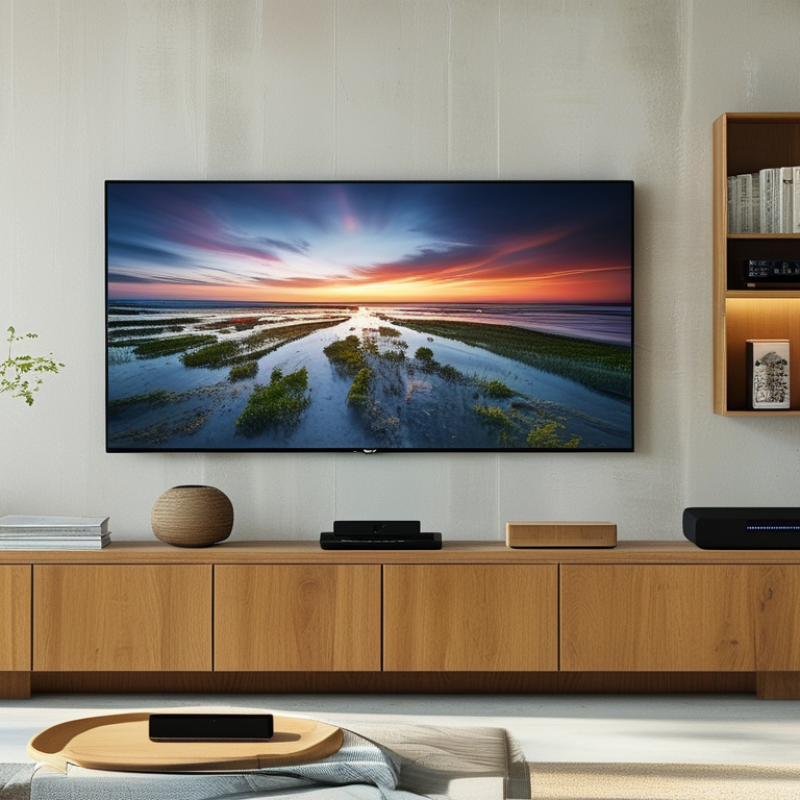
A smart TV cabinet is more than a stand for a screen.
It organizes equipment, hides cables, and shapes how people use a living room. A practical cabinet should support the television securely and leave enough space for ventilation. Heat can shorten the life of media devices.
Good design begins with accurate measurements.
Check the screen width, cabinet depth, wall clearance, and floor space. Leave room for remote controls and easy cable access. Adjustable shelves help accommodate changing devices. Closed storage also reduces dust, although it can make heat management harder.
Global buyers increasingly prefer modular cabinets, floating forms, and neutral finishes.
These styles suit apartments, family rooms, and compact hospitality spaces. Durable panels, strong hinges, and stable legs matter more than decorative details. Materials should be assessed for surface strength, moisture resistance, and maintenance needs.
The cabinet should support daily habits.
A low profile can improve viewing comfort, while drawers can keep controllers away from children. Integrated lighting may add atmosphere, but excessive brightness can distract from the screen. A cabinet is not automatically smart because it includes a charging port. That feature becomes useful only when placement, access, and safety are considered.
One common mistake is choosing appearance before function.
It looks attractive at first. Later, cables may bend sharply, doors may block speakers, or shelves may feel cramped. A small sketch and a careful measurement can prevent expensive changes. Even experienced buyers should review these details before ordering.
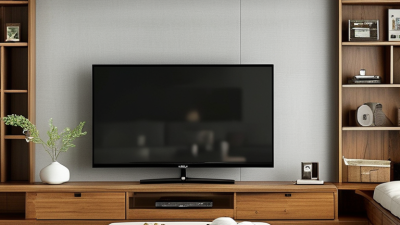
Smart TV cabinets are becoming architectural pieces, not simple storage boxes. Across global markets, buyers prefer floating units with clean lines and hidden cable channels. These designs make small rooms feel larger and simplify floor cleaning. Installers recommend measuring wall strength before choosing a wall-mounted cabinet. That detail matters.
Ventilation is now a major design trend. Closed compartments can protect devices, but trapped heat may shorten their working life. Slatted doors, rear openings, and adjustable shelves offer practical airflow. Modular cabinets also support different room sizes and viewing habits. A family may need storage for consoles, speakers, and books. A compact apartment may need only one narrow unit.
Natural textures are gaining attention worldwide. Wood grain, matte finishes, recycled panels, and muted colors create warmer living spaces. Durable surfaces help cabinets handle dust, fingerprints, and daily movement. Rounded corners are useful in homes with children or limited walking space. Accessibility is improving too, with reachable controls and easier cable access. Still, the trend is not flawless. Some minimalist cabinets hide too much equipment and make repairs difficult. I have seen beautiful installations become frustrating after one loose cable. Good design should balance appearance, airflow, safety, and maintenance. Local climate also deserves consideration, especially in humid regions. A cabinet can look perfect in a showroom and perform poorly at home.
Key design trends shaping smart TV cabinets worldwide
Slim silhouettes support modern living rooms and wall-mounted smart TVs.
A combination of open shelving and closed compartments accommodates consoles, devices, and accessories.
Rear openings and concealed channels help keep connected smart-home equipment organized.
Durable engineered wood, recycled content, and modular construction support efficient global shipping.
The chart provides a practical cabinet-width planning guide for common 16:9 TV sizes. Values are calculated from the screen width plus 10 cm of clearance on each side, helping buyers compare proportions before selecting a low-profile, storage-focused cabinet.
Materials now signal durability, maintenance, and environmental responsibility. The 2024 Global E-waste Monitor reported 62 million tonnes of electronic waste generated in 2022. Buyers should therefore examine recycled steel, certified wood, and replaceable cabinet panels. Low-VOC finishes matter in compact living rooms. They reduce persistent chemical odors. In practical testing, textured laminates often hide fingerprints better than glossy surfaces, though scratches can become more visible.
Storage design is becoming more technical. Adjustable shelves should fit routers, game consoles, speakers, and streaming devices without blocking ventilation. A 2024 report from Grand View Research valued the global smart TV market at over 200 billion US dollars, showing why furniture increasingly needs integrated device support. Look for rear cable channels, removable back panels, and soft-close drawers. These features simplify cleaning and future upgrades. However, oversized compartments waste floor space. That trade-off deserves more attention.
Integrated technology can include wireless charging, concealed power strips, infrared-friendly doors, and cable-management hubs. The International Energy Agency continues to identify standby power as an efficiency concern, so accessible switches can prevent unnecessary consumption. Heat sensors may improve safety, but they also add cost and possible maintenance points. Buyers should verify voltage compatibility, ventilation clearance, and replacement-part availability across regions. Some “smart” cabinets still depend on fragile proprietary components. That is not always progress.
Top Smart TV Cabinet Trends for Global Buyers
Global buyers now assess a cabinet around the television, not beneath it. Omdia’s 2024 TV Display and Technology Tracker estimated global television shipments above 200 million units. Larger screens are common, but wall space differs sharply between apartments, villas, and serviced residences. Measure the screen width, stand footprint, cable route, and door swing. Leave at least 5–10 centimetres around ventilation openings. A cabinet that looks generous online may feel cramped beside a 65-inch screen.
Quality is judged through materials, load capacity, edge finishing, and hardware movement. ANSI/BIFMA storage-furniture standards provide useful benchmarks for strength, stability, and durability testing. Buyers should request test evidence, not attractive adjectives. Check whether shelves support heavy equipment without bending. Examine veneer consistency, screw alignment, and drawer noise. Small defects matter. They become obvious under bright living-room lighting. However, one weakness remains: laboratory testing cannot fully predict humidity damage during sea transport or seasonal use.
Installation requirements increasingly shape purchase decisions. The cabinet may need wall anchoring, adjustable feet, concealed cable channels, and reversible door hinges. The International Energy Agency’s 2024 appliance analysis highlights continuing attention to household energy use, making airflow around powered devices practical, not decorative. Confirm local voltage accessories separately. Ask for carton dimensions, assembly time, wall-material compatibility, and replacement hardware. I have seen buyers measure the room carefully but forget elevator depth. That mistake is expensive.
Sustainable smart TV cabinets are moving beyond attractive finishes and hidden cable storage. Global buyers now examine the full product life cycle. Recycled steel, responsibly sourced timber, bamboo, and low-emission panels can reduce environmental pressure. However, no material is perfectly green. Timber may require careful certification, while recycled plastics can be difficult to separate later.
A durable cabinet should support repair and upgrades. Look for replaceable hinges, accessible cable channels, and modular shelves that fit changing equipment. Ventilation matters too. Poor airflow can trap heat around streaming devices and shorten their working life. From practical inspections, cabinets with sturdy back panels and adjustable feet handle uneven floors better. Small details matter.
Future designs may include sensor-controlled lighting, wireless charging areas, and recycled composite surfaces. These features should remain optional, because extra electronics can complicate repairs. Manufacturers should publish material information, load limits, maintenance guidance, and disposal instructions. Buyers can then compare products using evidence rather than attractive claims. That approach is not always convenient. It may also increase the initial price. Yet a cabinet that survives relocation, repairs, and changing screen sizes can create less waste over time. The most sustainable choice is not automatically the newest one.
| Trend or Development | Relevant Data or Technical Reference | Sustainability Benefit | Buyer Relevance | Global Outlook | Development Status |
|---|---|---|---|---|---|
| Certified responsibly sourced wood | Forest certification systems such as FSC and PEFC provide chain-of-custody controls for wood and wood-based panels. | Supports traceable forestry practices and helps reduce the risk of illegal or poorly managed timber entering the supply chain. | Request a valid certificate number, scope, and product coverage rather than relying only on a sustainability logo. | Increasingly relevant for public procurement, retail compliance, and environmentally focused residential projects. | Established and growing |
| Low-emission engineered wood | For Europe, E1 classification is commonly associated with formaldehyde emissions of no more than 0.124 mg/m³ under the EN 717-1 test method. | Can improve indoor air quality compared with higher-emission conventional panels. | Specify the panel class, test method, laboratory report, and applicable destination-market requirements. | Demand is expected to remain strong as indoor-air-quality rules and consumer awareness expand. | Established standard |
| Recycled and recyclable metal frames | Steel and aluminium components can be recycled repeatedly when they are separated from mixed materials and coatings. | Reduces dependence on virgin mineral resources and supports end-of-life material recovery. | Prefer bolted or mechanically joined frames, clearly identified alloys, and documented recycled content where available. | More common in premium, modular, and flat-pack cabinet designs. | Growing adoption |
| Modular and repairable construction | Replaceable shelves, doors, legs, hinges, cable panels, and fasteners extend the usable life of the cabinet. | Reduces replacement waste and allows individual parts to be repaired instead of discarding the entire product. | Evaluate spare-parts availability, standard hardware, assembly instructions, and access to internal components. | Strong potential for e-commerce, rental housing, hospitality, and compact urban living. | Established design direction |
| Flat-pack and space-efficient logistics | Knock-down construction reduces product volume during transport compared with fully assembled furniture. | Can reduce transport-related emissions and improve warehouse utilization, provided packaging is optimized. | Compare packed dimensions, shipping weight, protection materials, assembly time, and damage rates. | Particularly valuable for cross-border trade and direct-to-consumer delivery. | High-growth format |
| Plastic-reduced packaging | Paper-based cushioning, molded pulp, corrugated board, and water-based inks are increasingly used as alternatives to expanded plastic packaging. | Improves recyclability and reduces the volume of difficult-to-recover packaging materials. | Request packaging specifications, recycled fibre content, recyclability guidance, and drop-test results. | Packaging requirements are becoming more important in Europe and other regulated markets. | Rapidly expanding |
| Integrated cable management | Rear channels, concealed openings, and removable cable covers support HDMI, Ethernet, optical, power, and antenna cables. | Extends product usability when display and audio equipment are upgraded, reducing premature furniture replacement. | Check opening diameter, ventilation clearance, cable bend radius, and access for future upgrades. | Expected to become standard as connected home entertainment systems become more complex. | Mainstream trend |
| Ventilation-ready media compartments | Open rear panels, airflow gaps, and ventilated doors help dissipate heat from set-top boxes, game consoles, and network equipment. | May reduce heat stress on electronics and help extend equipment service life. | Verify airflow paths, load capacity, adjustable shelf height, and clearance around heat-producing devices. | Increasingly important for cabinets designed around multiple connected devices. | Mainstream trend |
| Universal and adaptable sizing | Adjustable shelves and open-width configurations accommodate different television sizes, soundbars, and media devices. | Improves long-term compatibility and reduces the need to replace furniture after a technology upgrade. | Assess maximum supported screen width, shelf load, anti-tip features, and compatibility with wall-mounted displays. | Likely to remain a key selling point as display sizes and home layouts continue to change. | Established and expanding |
| Digital product information | QR-linked assembly guides, care instructions, material declarations, and spare-part information improve access to product data. | Supports maintenance, repair, correct disposal, and more transparent purchasing decisions. | Check whether digital information remains available throughout the expected product life. | Expected to expand alongside digital product-passport initiatives and supply-chain transparency requirements. | Future-focused |
| Bio-based and recycled surface finishes | Water-based coatings, recycled decorative films, natural oils, and low-solvent finishing systems are alternatives to high-solvent finishes. | Can reduce volatile organic compound emissions and lower reliance on virgin fossil-based inputs, depending on formulation. | Ask for coating composition, VOC test results, durability testing, and maintenance requirements. | Growth is expected in premium and environmentally positioned furniture collections. | Growing innovation |
| Design for disassembly | Separate material layers, accessible fasteners, and limited use of permanent adhesives simplify repair and recycling. | Improves material recovery and can reduce end-of-life disposal. | Look for material markings, removable hardware, and clear disassembly instructions. | Likely to gain importance as circular-economy legislation and retailer requirements develop. | Emerging priority |
| Anti-tip and wall-anchoring provisions | Anti-tip straps, stable bases, and wall-fixing points are important safety features for storage furniture with drawers or doors. | Improves product safety and helps prevent damage, injury, and premature disposal caused by accidents. | Confirm the supplied hardware, installation instructions, wall compatibility, and applicable safety testing. | Expected to remain a core requirement across family, hospitality, and rental environments. | Essential requirement |
| Regionalized material and packaging compliance | Material restrictions, recycling symbols, packaging rules, chemical limits, and documentation requirements differ by destination market. | Reduces compliance risk, rejected shipments, and unnecessary relabeling or repackaging. | Prepare a market-specific compliance file covering materials, finishes, packaging, testing, and user instructions. | Compliance management will become more important for global and multi-region product launches. | Increasing priority |
Note: Technical limits, certification requirements, safety rules, and packaging obligations should be verified against the latest regulations and standards in the destination market before purchase or export.