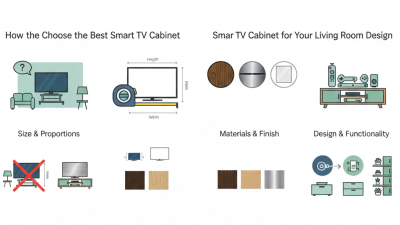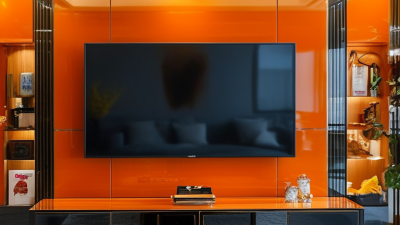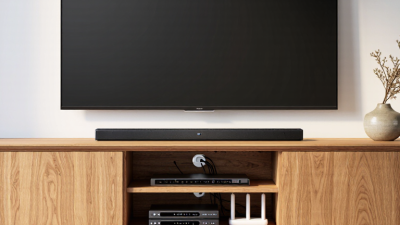
China is an important sourcing destination for modern wooden furniture, but finding the right Wood Modern Tv Console manufacturer takes more than comparing prices. Grand View Research’s 2023 furniture market report estimated the global market at $677.09 billion in 2022, with projected annual growth of 5.9% from 2023 to 2030. This figure covers furniture broadly, not TV consoles alone. Still, it signals a large, competitive market where material quality and dependable production matter. The category is less tidy than its name suggests. “Modern” can mean clean-lined oak veneer, solid-wood construction, or a mixed-material cabinet with metal legs.
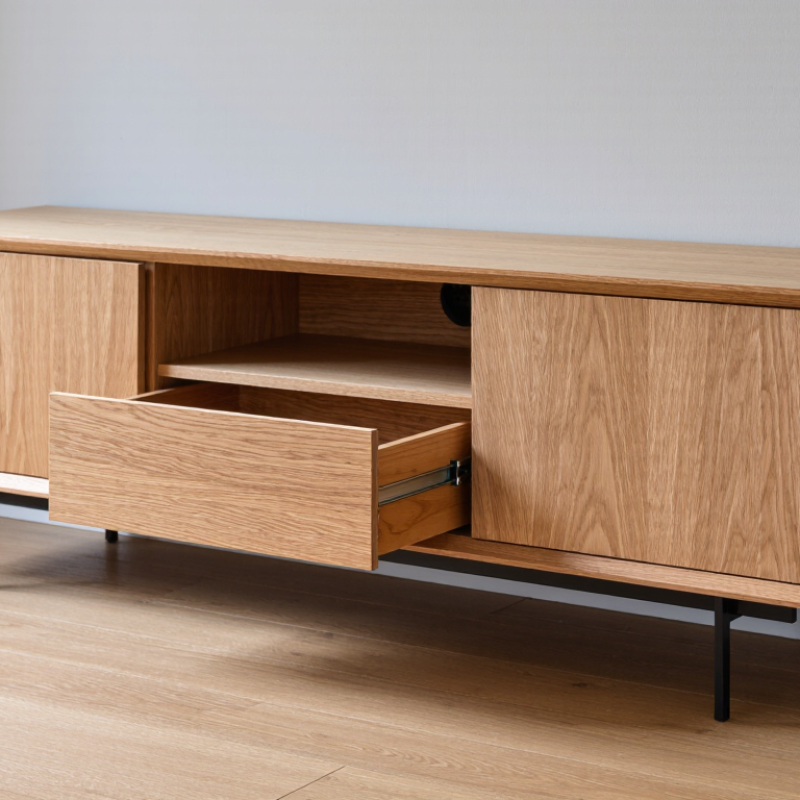
A useful manufacturer comparison should look beyond showroom photos. Ask about wood species, veneer consistency, moisture control, joinery, cable openings, packaging, and documented quality checks. Request close-up images of corners and drawer runners, plus specifications for dimensions and load capacity. Small details show up at home. A poorly aligned door or rough cable hole can spoil an otherwise handsome console. Furniture designer Charles Eames observed, “The details are not the details. They make the design.” His words offer a practical lens for assessing both product design and factory workmanship. They are not a substitute for inspection, though. Samples, clear specifications, and direct answers help turn a polished catalogue into a more reliable sourcing decision. This guide examines China’s leading manufacturers through those practical criteria, while recognizing that rankings can shift with product range, order size, and service. A showroom image is only a start.
China’s modern wood TV console industry sits within a much larger furniture manufacturing base. The National Bureau of Statistics reported that furniture manufacturers above designated size earned about RMB 655.7 billion in revenue in 2023, down 4.4% year on year. China Customs data also put furniture exports at roughly US$50.6 billion that year, with exports declining. These figures cover many furniture categories, not TV consoles alone. Still, they show the scale and competitive pressure facing suppliers.
For buyers, the shift toward slim screens and compact homes favors consoles with clean lines, cable openings, adjustable shelves, and practical storage. Wood-based panels help control cost and keep dimensions consistent, while solid wood offers a distinct grain but needs careful moisture management. Small details matter. Check edge sealing, drawer alignment, rear ventilation, and how the unit handles a heavy television. A polished sample is not enough; finish consistency across a full order can be harder to maintain.
Manufacturers are also responding to demand for tailored sizes and mixed materials, such as wood surfaces with metal legs. Yet customization can complicate lead times and quality checks. The industry data describes furniture broadly, so it cannot prove demand for any single console design. That gap matters. Buyers should compare material specifications, load testing, packaging protection, and production samples before treating a low quote as real value.
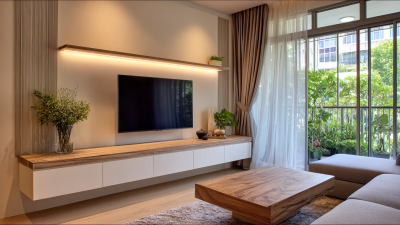
For buyers comparing China’s modern wood TV console manufacturers, material selection affects stability, finish, and indoor air quality. Solid wood offers natural grain, but it can expand or contract as room humidity changes. The USDA Forest Products Laboratory’s Wood Handbook explains this moisture response, making proper panel construction and stable indoor conditions important. Veneered plywood can provide a real-wood surface with a layered core; MDF suits smooth painted fronts, while particleboard is often used in cost-conscious designs. Each has trade-offs.
Check the details. The U.S. EPA’s TSCA Title VI standards set formaldehyde emission limits of 0.05 ppm for hardwood plywood, 0.11 ppm for MDF, and 0.09 ppm for particleboard. These are limits, not proof that any specific console complies; ask suppliers for product-level test documentation. Design matters too. A console should have rear cable openings, ventilation space around electronics, and shelves supported for their intended load. Flush doors look calm, but tight clearances may bind when panels shift. That detail is easy to overlook. Finishes, edge sealing, and joinery deserve the same scrutiny as the visible wood grain.
Modern TV consoles made in China typically move from design drawings to material preparation, machining, assembly, and final inspection. A capable manufacturer checks board thickness, surface quality, and moisture before cutting. This matters because unstable panels can warp after installation. CNC routers shape cable openings and shelf edges with repeatable accuracy. Workers then sand visible corners by hand, where machine marks may remain.
During assembly, teams fit panels with dowels, screws, or concealed connectors, depending on the design and load requirements. They check drawer movement, door gaps, and whether the unit sits level on a flat surface. Finishing may involve veneer, laminate, or painted surfaces. Each needs careful dust control and drying time. Production is not perfectly uniform. A finish can look slightly different under warm showroom lights than under daylight, so sample approval deserves attention.
Tips: Ask for material specifications, edge-detail photos, and a finished sample. Check cable access and shelf load limits. Do not judge color from one screen image alone.
| Production Stage | Materials and Inputs | Typical Manufacturing Method | Quality Checks |
|---|---|---|---|
| 1. Product design and engineering | Drawings, 3D models, hardware specifications, packaging requirements, and target dimensions. | Designers prepare production drawings and confirm panel thicknesses, joint details, cable openings, door clearances, and assembly points before making a sample. | Review dimensions, stability, access for cables and ventilation, hardware fit, and assembly instructions against the approved design. |
| 2. Material selection | Solid wood, plywood, medium-density fibreboard (MDF), particleboard, veneer, laminates, metal fittings, and glass where specified. | Materials are selected according to the design, intended finish, structural requirements, cost, and applicable market regulations. Different materials may be combined in one console. | Check material grade, panel thickness, surface condition, moisture, and documentation for any required emissions or product-compliance standards. |
| 3. Conditioning and preparation | Solid timber and wood-based panels awaiting machining. | Timber is dried and conditioned before use; panels are acclimatized and inspected to reduce the risk of movement, distortion, or finishing defects during production. | Check moisture and storage conditions. The suitable moisture level depends on the wood species, product construction, and destination climate. |
| 4. Cutting and panel machining | Prepared boards, panel stock, and approved cutting lists. | Panels are cut to size using panel saws or CNC equipment. CNC routers may machine cable ports, grooves, hinge locations, and other shaped features. | Verify part dimensions, squareness, edge quality, opening positions, and correspondence with the cutting list. |
| 5. Edge treatment and drilling | Cut panels, edge banding, adhesives, and hardware holes. | Exposed panel edges are commonly finished with veneer, PVC, or other specified edge materials. Drilling creates locations for hinges, dowels, screws, and shelf supports. | Inspect edge adhesion, trimming, corners, hole alignment, and consistency of visible edges. |
| 6. Joinery and carcass assembly | Machined panels or timber parts, screws, dowels, cam fittings, glue, and brackets. | Parts are assembled into the main console structure using the joinery and fittings specified in the design. Shelves and partitions are fitted before final finishing where appropriate. | Check overall dimensions, panel alignment, joint security, door and drawer clearances, and resistance to wobble. |
| 7. Surface preparation and finishing | Sandpaper, stain, paint, clear coat, veneer, or decorative laminate. | Surfaces are prepared and finished to the approved appearance. Finishing may involve sanding, coating, curing, or applying a decorative surface, depending on the material and specification. | Inspect color and sheen consistency, coverage, adhesion, smoothness, visible defects, and finish curing before packing. |
| 8. Hardware and functional fitting | Hinges, drawer slides, handles, shelf pins, cable grommets, and adjustable feet. | Hardware is installed and adjusted so that doors, drawers, shelves, and cable-management features operate as intended. | Test repeated opening and closing, hardware alignment, drawer travel, door gaps, and secure attachment. |
| 9. Final inspection and packing | Completed console, protective materials, cartons, labels, and assembly instructions. | The finished product is cleaned, inspected, protected against abrasion and impact, and packed for storage or shipment. Knock-down designs are packed with their fittings and assembly guidance. | Confirm appearance, completeness, packaging protection, carton markings, and consistency with the approved sample and order specification. |
The process and materials shown are common examples for modern wood TV consoles. Actual specifications, equipment, inspection procedures, and compliance requirements vary by product design and destination market.
When evaluating TV console manufacturers in China, look beyond polished showroom photos. Ask which wood species, veneers, and board grades are used, and request a written material specification. Details matter. A clear answer should distinguish solid-wood parts from veneer-covered panels, rather than using “wood” as a vague label. Check panel thickness, edge treatment, drawer hardware, and the finish under natural light. A sample can reveal rough corners or uneven color that a catalog hides.
Production controls are just as important. Ask how dimensions are checked, how finish consistency is monitored, and what happens when a unit fails inspection. Request records or photos from a recent quality check, then compare them with a pre-production sample. Ask for evidence. Test practical features yourself: cable openings should align with your equipment, shelves need adequate clearance, and ventilation should not be blocked by a back panel. These details are easy to miss on a drawing.
A capable supplier should explain lead times, minimum order quantities, packaging, and how damage claims are handled. For export orders, review carton strength and corner protection; a beautiful console can still arrive with a chipped edge. Communication quality matters too. Send one change request and check whether the revised drawing reflects it accurately. I would not judge a factory from one visit or one sample alone; both may look better than routine production. That limitation is worth acknowledging.
Modern wood TV console manufacturers generally serve three roles. Integrated producers control panel cutting, edge-banding, finishing, and assembly. They suit retailers seeking steady volumes and consistent dimensions. Contract manufacturers make products to a buyer’s drawings, materials, and packaging rules. Some also support design development, though capabilities vary. Smaller specialist workshops focus on solid wood, distinctive joinery, or custom sizing. Their output may be limited, but they can respond to unusual room layouts and finish requests.
The wider market gives useful context, not a direct measure of TV-console demand. Grand View Research estimated the global furniture market at US$677.09 billion in 2024. That broad figure includes many furniture categories. Buyers should therefore compare suppliers on console-specific evidence: panel thickness, load testing, cable access, finish durability, and packaging protection. A sample drawer or door can reveal alignment problems that a catalog photo hides. The categories overlap. That is worth remembering.
Tip: Ask for a production sample and a written material specification. Check the rear cable opening, shelf support, and finish under warm room lighting before placing a larger order.