| 1. Product Configuration and Technical Fit |
| Suitable TV size |
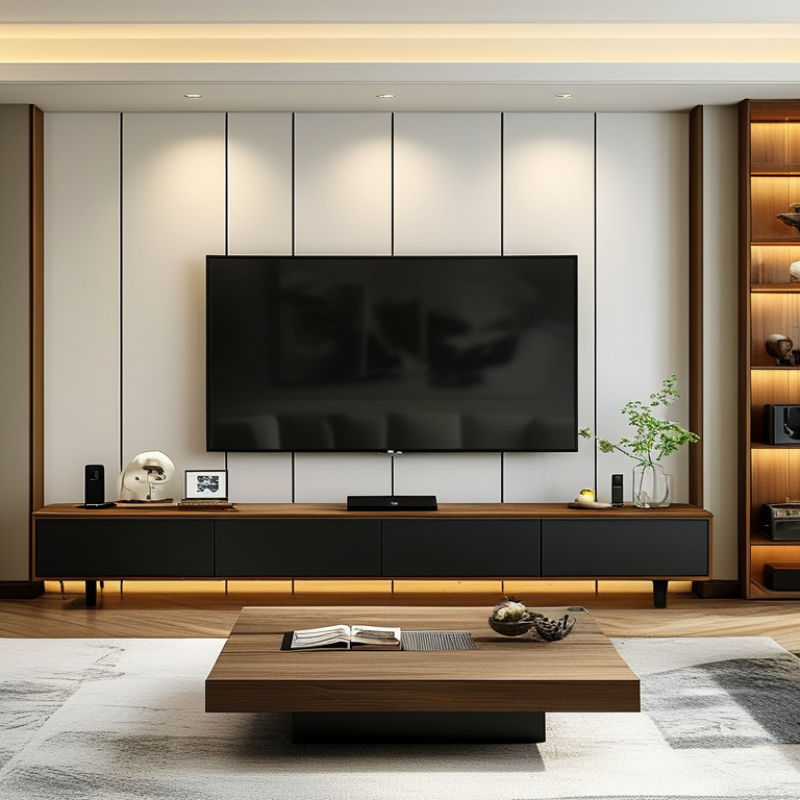
Choose a cabinet wider than the television base. Allow at least 10–20 cm of clearance on both sides and confirm the stand depth. |
Common cabinet widths: 120–240 cm; common TV compatibility: 55–85 inches. |
Living rooms, apartments, serviced residences, and hospitality rooms. |
Confirm TV width, stand footprint, wall-mount position, cable exit location, and maximum supported load. |
| Cabinet dimensions |
Typical height is 40–60 cm, with sufficient internal volume for media devices and ventilation. |
Depth commonly ranges from 35–50 cm; height commonly ranges from 40–60 cm. |
Low-profile contemporary interiors and standard residential installations. |
Measure wall length, viewing height, door clearance, elevator dimensions, and final installation route. |
| Load capacity |
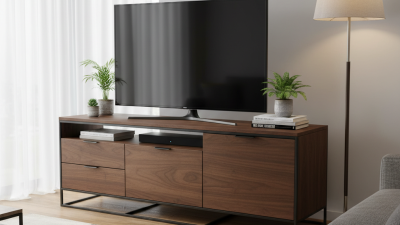
Use a top panel with a stated load rating and reinforced joints. The rating should exceed the TV and accessory weight with a safety margin. |
Many residential models are rated for approximately 40–80 kg, depending on construction. |
Large televisions, soundbars, game consoles, and decorative equipment. |
Request a written load rating, panel thickness, joint construction, and test method. |
| Storage layout |
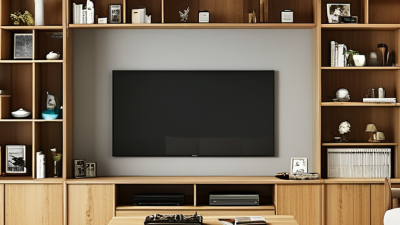
Combine open shelving with doors or drawers. Include adjustable shelves where equipment height varies. |
Typical layouts include 2–4 compartments, 1–3 drawers, or sliding doors. |
Homes requiring a balance between display access and concealed storage. |
Check usable internal dimensions, shelf adjustability, drawer extension, hinge quality, and door alignment. |
| Cable management |
Provide rear cable holes, open ventilation paths, and separate routes for power and signal cables where possible. |
Rear cable openings commonly measure approximately 50–80 mm in diameter or use rectangular cut-outs. |
Smart TV, streaming, gaming, and multi-device installations. |
Confirm the number and position of cable ports and whether unfinished cut edges are sealed. |
| Ventilation |
Use perforated or open rear panels around receivers, routers, game consoles, and other heat-producing devices. |
Maintain visible airflow space around electronic equipment; exact clearance depends on device instructions. |
High-use entertainment systems and enclosed media compartments. |
Check rear-panel design, ventilation openings, device clearance, and heat-resistance information. |
| Safety and stability |
Prefer anti-tip fittings, wall-anchoring hardware, rounded exposed edges, and stable wide bases. |
Safety hardware is usually included for residential products but may be optional in low-cost models. |
Homes with children, pets, public areas, and rental properties. |
Request installation instructions, anchoring hardware, tip-resistance information, and edge-finish details. |
| Material and surface finish |
Common choices include engineered wood panels, solid wood, metal frames, glass, and mixed-material construction. |
Engineered wood offers broad style and price choices; solid wood and metal generally increase cost. |
Engineered wood for value; solid wood or metal for premium durability and distinctive design. |
Verify panel composition, thickness, veneer or laminate type, moisture resistance, edge banding, and finish samples. |
| 2. Indicative Pricing by Product Position |
| Entry-level flat-pack cabinet |
Basic engineered wood construction, standard finish, limited customization, and self-assembly packaging. |
US$80–220 per unit before international freight and taxes. |
Budget residential projects, online retail, and high-volume standard orders. |
Compare panel thickness, hardware, packaging strength, replacement-part policy, and assembly time. |
| Mid-range assembled or semi-assembled cabinet |
Improved hardware, stronger construction, better finishing, cable management, and more storage options. |
US$220–650 per unit before international freight and taxes. |
Most residential buyers, apartment projects, and furniture retailers. |
Request a complete specification sheet and confirm whether the quoted price includes assembly. |
| Premium custom cabinet |
Higher-grade materials, custom dimensions, upgraded hardware, detailed finishing, and project-specific packaging. |
US$650–1,800+ per unit before international freight and taxes. |
Luxury homes, hospitality projects, interior design contracts, and bespoke installations. |
Confirm drawings, approved samples, revision limits, inspection stages, and warranty terms. |
| Project or hospitality specification |
Standardized dimensions, durable finishes, batch consistency, documentation, and coordinated delivery. |
US$180–900 per unit, depending on volume and specification. |
Hotels, serviced apartments, student housing, and multi-unit developments. |
Check batch color consistency, replacement-unit availability, installation schedule, and site delivery requirements. |
| Common additional costs |
Budget separately for samples, tooling, customization, inspection, packaging upgrades, freight, insurance, duties, taxes, and local delivery. |
Additional landed cost can vary substantially by destination and shipping method. |
All international purchasing programs. |
Request a delivered-cost breakdown rather than comparing product prices alone. |
| 3. Supplier Selection and Order Terms |
| Supplier capability |
Prioritize suppliers that can provide technical drawings, material samples, quality records, export packaging, and stable production capacity. |
Capability is more important than the lowest quoted unit price. |
Repeat orders, customized products, and commercial projects. |
Review factory or workshop information, sample quality, production photos, references, and response time. |
| Minimum order quantity |
Standard products usually have lower minimum quantities than custom products requiring new tooling or special materials. |
Sample orders: 1–5 units; standard wholesale orders: often 20–100 units; custom projects may require more. |
Retail testing, wholesale purchasing, and project procurement. |
Confirm whether mixed colors, mixed sizes, and repeat-order quantities count toward the minimum. |
| Customization options |
Common options include width, height, finish, handle style, leg design, storage layout, cable openings, and packaging. |
Custom features may add design, tooling, sampling, and production charges. |
Private-label collections, interior projects, and region-specific designs. |
Obtain approved drawings, material codes, color standards, and a signed sample approval record. |
| Payment structure |
Use a documented payment schedule linked to order confirmation, sample approval, production progress, and final inspection. |
Common arrangements include a deposit followed by balance payment before shipment, subject to negotiation and buyer protection. |
International transactions requiring production funding. |
Confirm refund conditions, bank details, invoice accuracy, inspection rights, and payment milestones. |
| Quality inspection |
Inspect dimensions, finish, color, hardware, stability, cable openings, packaging, labeling, and quantity before dispatch. |
Inspection may be performed by the buyer, an independent inspector, or an agreed third party. |
High-value orders and products with strict project specifications. |
Use an acceptance checklist with measurable tolerances and photographic records. |
| 4. Delivery Options and Typical Lead Times |
| Express air shipment |
Fastest option for samples and urgent small consignments, but generally the most expensive per kilogram or cubic meter. |
Transit commonly takes about 3–10 business days, excluding customs clearance. |
Samples, replacement parts, urgent prototypes, and small cartons. |
Confirm dimensional-weight calculation, remote-area charges, customs documents, and damage coverage. |
| Air freight |
Faster than sea freight with a higher cost; suitable when delivery time is more important than freight efficiency. |
Transit commonly takes about 5–15 business days, excluding production and customs. |
Medium-sized urgent orders and seasonal replenishment. |
Compare airport-to-airport and door-to-door quotations and verify who handles import clearance. |
| Sea freight — consolidated shipment |
Shared container space for smaller volumes; economical but subject to consolidation and port schedules. |
Port-to-port transit commonly takes about 25–50 days, depending on route and congestion. |
Small wholesale orders and mixed cargo. |
Confirm cubic-meter calculation, cut-off dates, destination charges, and delivery appointment rules. |
| Sea freight — full container |
Dedicated container space with better control for larger quantities and efficient palletized packing. |
Port-to-port transit commonly takes about 20–45 days, excluding production and customs. |
Large wholesale orders, retail replenishment, and multi-unit projects. |
Verify container capacity, loading plan, moisture protection, demurrage responsibility, and unloading conditions. |
| Road or rail delivery |
Useful for regional trade lanes where land transport offers a practical alternative to air or sea freight. |
Often about 7–30 days, depending on distance, border procedures, and service type. |
Cross-border regional distribution and inland destinations. |
Confirm border documentation, final-mile delivery, unloading equipment, and insurance coverage. |
| Production lead time |
Standard items generally require less time than customized products or orders involving new tooling. |
Samples: commonly 7–21 days; standard production: commonly 20–45 days; custom production: commonly 30–75 days. |
Planning purchase orders and launch schedules. |
Get a written production completion date and define the remedy for preventable delays. |
| Trade terms |
Compare EXW, FOB, CFR, CIF, DAP, and DDP only after confirming which costs, risks, customs tasks, and delivery stages are included. |
The lowest product quote is not necessarily the lowest landed cost. |
Buyers with different levels of logistics and import capability. |
Request an itemized quotation showing product price, packing, freight, insurance, duties, taxes, and local delivery. |
| 5. After-Sales Support and Risk Control |
| Warranty coverage |
Look for written coverage covering structural defects, hardware failures, finish problems, and missing components. |
Commercial furniture warranty periods vary; one year is a common minimum reference point, while longer coverage may be negotiated. |
Residential, rental, hospitality, and institutional procurement. |
Check coverage period, exclusions, claim evidence, labor responsibility, freight responsibility, and remedy options. |
| Replacement parts |
Suppliers should retain records for hinges, handles, drawer slides, shelves, legs, fasteners, and panels. |
Small hardware is usually easier to replace than color-matched panels or custom components. |
Long-term installations and repeat retail sales. |
Ask how long parts remain available and whether parts can be shipped separately. |
| Damage and shortage claims |
Use numbered cartons, packing lists, inspection photos, and signed delivery records to support claims. |
Claim deadlines are defined by the purchase contract, carrier terms, or insurance policy. |
All international shipments, especially fragile or flat-packed furniture. |
Inspect cartons before signing, photograph visible damage, and report concealed damage promptly. |
| Assembly support |
Require clear multilingual instructions, labeled hardware, assembly diagrams, and replacement fasteners. |
Flat-pack assembly time commonly ranges from approximately 30–120 minutes, depending on complexity. |
Online retail, self-installation, and distributed project sites. |
Request a sample assembly test and verify whether local installation is available. |
| Communication and documentation |
Choose a supplier that provides timely answers, updated drawings, invoices, packing lists, inspection records, and shipping documents. |
High priority: clear communication reduces specification and delivery risks. |
Custom orders and international procurement with multiple stakeholders. |
Set response-time expectations and keep all specifications, approvals, and changes in written form. |
| 6. Buyer Decision Scorecard |
| Product fit |
Dimensions, weight capacity, storage, ventilation, cable management, stability, and finish meet the intended application. |
Recommended weighting: 25% of the total decision. |
Every buyer and every installation type. |
Do not approve from product photos alone; review technical data and a physical sample when possible. |
| Total landed cost |
Include product, packaging, freight, insurance, duties, taxes, customs handling, local delivery, and installation. |
Recommended weighting: 25% of the total decision. |
International wholesale and project purchasing. |
Compare quotations on the same trade term, quantity, currency, specification, and destination basis. |
| Delivery reliability |
Assess production capacity, lead-time commitments, packaging, shipping plan, tracking, and contingency arrangements. |
Recommended weighting: 20% of the total decision. |
Time-sensitive launches, seasonal sales, and construction projects. |
Request a milestone schedule and define delay notification and escalation procedures. |
| Quality consistency |
Evaluate sample-to-batch consistency, finish uniformity, dimensional tolerance, hardware function, and packaging performance. |
Recommended weighting: 15% of the total decision. |
Retail collections and multi-unit projects. |
Use pre-production approval and final random inspection criteria. |
| After-sales capability |
Consider warranty clarity, claim handling, spare parts, replacement policy, and communication quality. |
Recommended weighting: 15% of the total decision. |
Long-term residential, rental, hospitality, and commercial use. |
Ask for a sample warranty claim process before placing a large order. |